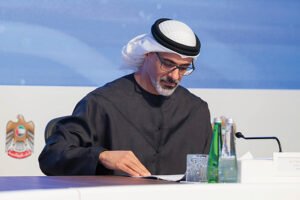


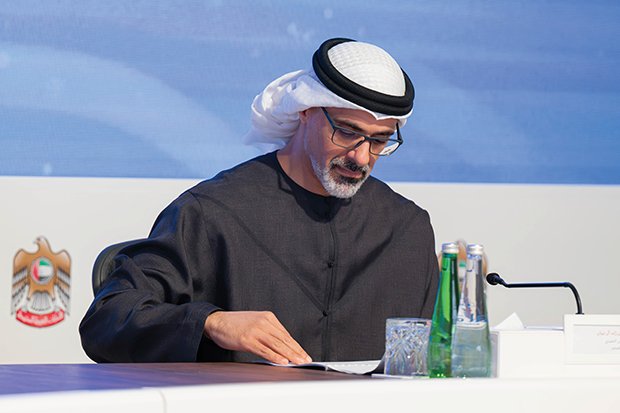

His Highness reviews achievements of Emirati Genome Program as it reaches one million participants
Abu Dhabi, 11 November 2026: His Highness Sheikh Khaled bin Mohamed bin Zayed Al Nahyan, Crown Prince of Abu Dhabi and Chairman of the Abu Dhabi Executive Council, has chaired a meeting of the Emirates Genome Council and approved the 2026-2031 National Genomics Masterplan.
The masterplan sets out the next phase of clinical initiatives and applications under the UAE’s National Genome Strategy, which shifts the focus from genomic data collection to implementation in advanced health, early prevention and precise, personalised medicine.
During the meeting, taking place as part of the UAE Government Annual Meetings, His Highness reviewed the latest updates and achievements of the Emirati Genome Program, which has reached its milestone of one million participants, underscoring its standing as the world’s most comprehensive population genome programme.
His Highness Sheikh Khaled bin Mohamed bin Zayed emphasised the importance of expanding preventative care programmes and accelerating the adoption of genomic research and innovation. His Highness highlighted the need to translate research findings into practical applications that further enhance community health and quality of life, cementing the UAE’s leadership in genomics and precision medicine.
His Highness also reviewed preparations to launch the world’s largest initiative of its kind in providing personalised genomic reports to 900,000 participants of the Emirati Genome Program. The initiative will help individuals learn about their health profiles and genetic predisposition, which enhances early detection and preventative care.
The meeting was attended by His Excellency Mohammad Al Gergawi, Minister of Cabinet Affairs; His Excellency Ahmed Ali Al Sayegh, Minister of Health and Prevention; His Excellency Omar Sultan Al Olama, Minister of State for Artificial Intelligence, Digital Economy and Remote Work Applications; His Excellency Saeed Mubarak Al Hajeri, Minister of State and Chairman of the Board of Directors of the Emirates Drug Establishment; His Excellency Mansoor Ibrahim Al Mansoori, Chairman of the Department of Health – Abu Dhabi and Secretary General of Emirates Genome Council; His Excellency Dr Alawi Alsheikh-Ali, Director-General of the Dubai Health Authority; His Excellency Dr Yousef Al Serkal, Director-General of Emirates Health Services; Her Excellency Dr Noura Khamis Al Ghaithi, Undersecretary of the Department of Health – Abu Dhabi; His Excellency Dr Amer Al Sharif, CEO of Dubai Health and President of the Mohammed bin Rashid University of Medicine and Health Sciences; and Professor Eric Xing, President of the Mohamed bin Zayed University for Artificial Intelligence.
New criteria
His Excellency Mansoor Ibrahim Al Mansoori, Chairman of the Department of Health – Abu Dhabi and Secretary General of the Emirates Genome Council, said: “The 2026-2031 National Genomics Masterplan sets new criteria for implementing genomics in clinical applications at the community level. The Emirati Genome Program’s unprecedented genomic database allows us to combine data with an AI-powered healthcare system and a state-of-the-art regulatory ecosystem to shift from genomic sequencing toward community-wide prevention and precision medicine.
“Providing personalised genomic reports marks a key milestone in this shift, allowing individuals to directly benefit from insights that were once exclusive to scientific research. We will work closely with researchers, physicians and specialised firms globally to translate scientific discoveries into practical applications that enhance the quality of healthcare.”